How about watching a wealth of choice — and free! —lectures and programmes on the internet about the following subjects: Nature, British Romantic poets, Pre-Raphaelite painters, and Shakespeare’s influence on their works?
When I started studying for a Master’s degree in English, in October 2020, I already knew that I would choose a subject for my thesis revolving around my favourite topics in British culture at that time, i.e., John Keats’s poetry, Pre-Raphaelite paintings, and English gardens and landscapes. So, anytime students were free to choose the subject of a research paper, I dug into one of these areas. As we had to watch or attend lectures (a minimum of 10 hours per term) and write a report about what we had learnt through them, I found a wealth of free lectures on the internet, most of them delivered by renowned academics. I am particularly grateful to Gresham College, London, which has posted a large collection of free lectures and programmes delivered by top-notch academics for many years (Watch Now | Gresham College).
“Is it a rebellion? No, Sire, it’s a revolution!”
In this first report, I underlined a few common features among the characteristics of the Romantic poets and the Pre-Raphaelites painters, including their “radical” or “rebellious” sides. Then I focused on the relationship that the first generation of artists–in each movement–developed with Nature. What did they mean by “Let Nature be your teacher” or “Truth to Nature” and how did they apply these principles in the representation of Nature in their work?
Shakespeare, the second generation of British Romantic poets, and the Pre-Raphaelites.
In this second report, starting from the themes that the PRB painters chose to represent, I sought to understand why so many narratives in their works were inspired either by the poems of the second generation of the Romantic poets (especially Keats’s) or by Shakespeare’s plays.
The representation of Nature in British literature and painting
Through the previous lectures, I understood how much the representation of Nature in British literature and painting reflected the historical and cultural changes happening in British society. In this last series of lectures and BBC2 programmes, I explored how the English countryside and gardens have evolved throughout modern British history and how their evolutions, reflecting historical and social changes and interrelating with British arts, have acquired distinctive features and personalities within European/western culture.
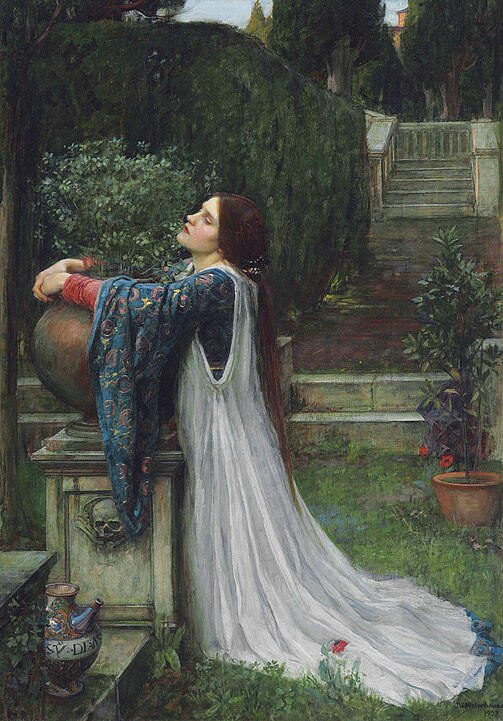
Illustration on top of this post: John William Waterhouse, Isabella and the Pot of Basil, 1907, Private collection. https://en.wikipedia.org/wiki/Isabella_and_the_Pot_of_Basil#/media/File:John_william_waterhouse_isabella_and_the_pot_of_basil.jpg
 The eternal student - anglophile version
