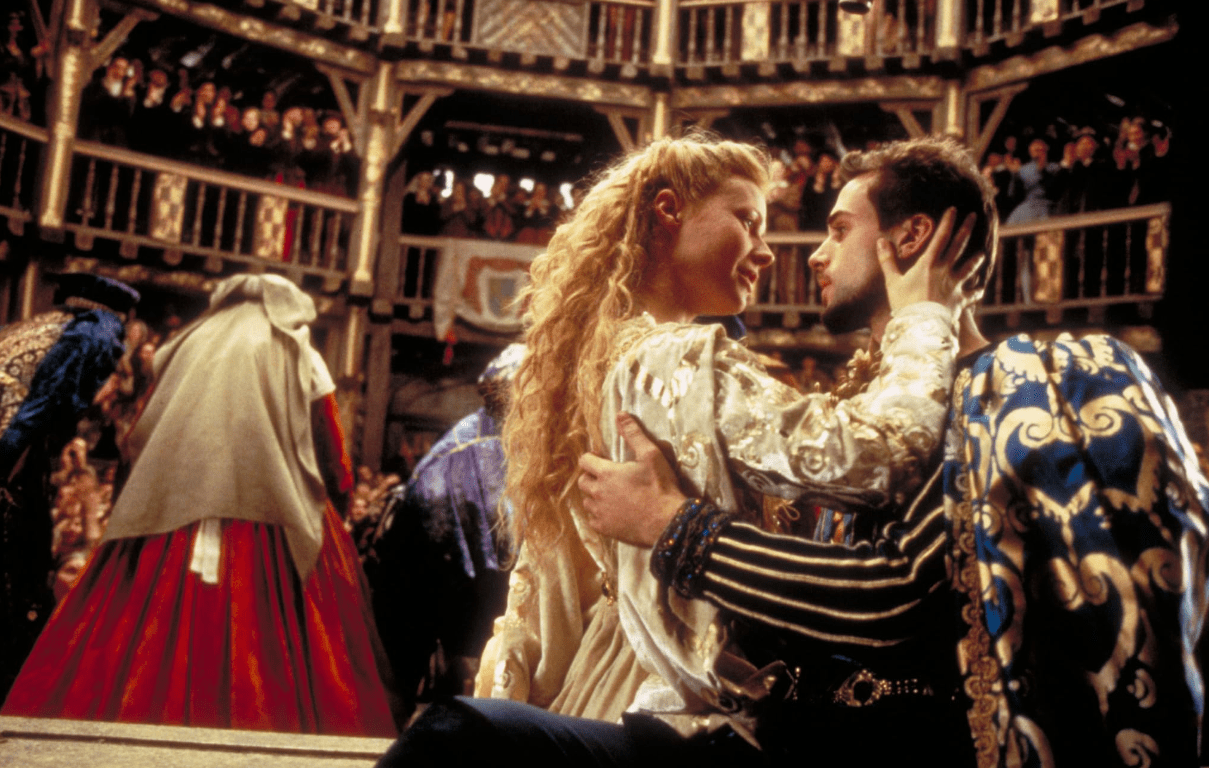
…or rather, a modest introduction to Shakespeare’s world!
More than four centuries after they were created, why haven’t Shakespeare’s plays lost their magic on us? According to Harold Bloom and Stephen Greenblatt, an answer to this question may be found in Shakespeare’s ability to enter deeply into almost every character he deployed. This skill seems to have been his signature — what John Keats called “Negative Capability” in a letter to his brothers on 22 December 1817. Even his secondary characters, such as Shylock, Falstaff, Parolles, Caliban, along with dozens of other characters, possess a presence, a compelling immediacy, far in excess of the strict necessity of the plots in which they appear. To both academics, Shakespeare’s humanity, his uncanny ability to confer life upon the objects of imaginative attention, explain the cunning magic of his plays, and the persistent attraction of his characters to the imagination of the actors and the public.
Even though, sometimes, I do not understand more than half of a speech when watching a play, I find myself so enthralled with the stories and the acting—be it in the spartan BBC adaptations of the early 1980s or in some lavish American adaptations for the cinema—that it doesn’t matter to me if I don’t catch every word. In truth, who does? These plays are so dense, reading them represents quite a challenge for non-native speakers, and understanding Shakespeare’s language can even be difficult for modern readers/audience in general: hence, the existence of websites for students such as “No Fear Shakespeare”: No Fear Shakespeare | SparkNotes or “No Sweat Shakespeare”: https://nosweatshakespeare.com/.
In this post, I just would like to share with you two short essays I wrote for oral presentations during my studies at university, the first one about the “Shakespeare authorship question”, and the second one about Portia’s speech “The Quality of Mercy” from The Merchant of Venice. I also recommend some resources which have helped me understand Shakespeare’s universe and appreciate it even better.
Shakespeare or not Shakespeare?
Oral presentation of Portia’s speech ‘The Quality of Mercy is not strained’
Resources:
1) Lectures:
“Classic Shakespeare”, a series of six lectures delivered by Sir Jonathan Bate, at Gresham College, from October 2017 to May 2018. Professor Bate explores the many ways in which Shakespeare’s imagination was shaped by the stories, ideas, and figures of ancient Greece and Rome. Classic Shakespeare | Gresham College
“Shakespeare – The Invention of the Human” by Harold Bloom, at Yale (20 April 2012). In this lecture, Bloom summarizes (or rather promotes) the main ideas discussed in one of his books, Shakespeare: The Invention of the Human. https://www.youtube.com/watch?v=4TzzWi5kPnA&t=328s&ab_channel=YaleUniversity
“Shakespeare’s Life-making” by Professor Stephen Greenblatt (The Holberg Lecture 2016). https://www.youtube.com/watch?v=DfZdzEFJuiw
And more lectures on Shakespeare on the following website: https://www.birmingham.ac.uk/schools/edacs/departments/shakespeare/events/lecture-videos
2) MOOCs:
“Shakespeare Matters” on edX platform: a very good introduction to Shakespeare’s plays. We approach two tragedies, Hamlet and Othello, two comedies, A Midsummer Night’s Dream and A Winter’s Tale, and a history play, Henry V. AdelaideX: Shakespeare Matters | edX
“Shakespeare’s The Merchant of Venice: Shylock” by Professor Stephen Greenblatt, on edX platform: an in-depth re-examination of one of the most staged of Shakespeare’s plays—though quite controversial now. HarvardX: Shakespeare’s The Merchant of Venice: Shylock | edX
3) Literary criticism:
Bate, Jonathan. Shakespeare and the English Romantic Imagination. Clarendon Paperbacks. Oxford: University Press, 2011.
Bloom, Harold. Shakespeare – The Invention of the Human. London: Fourth Estate, 1999.
The Romantics on Shakespeare. Edited by Jonathan Bate. London: Penguin Books, 1992.
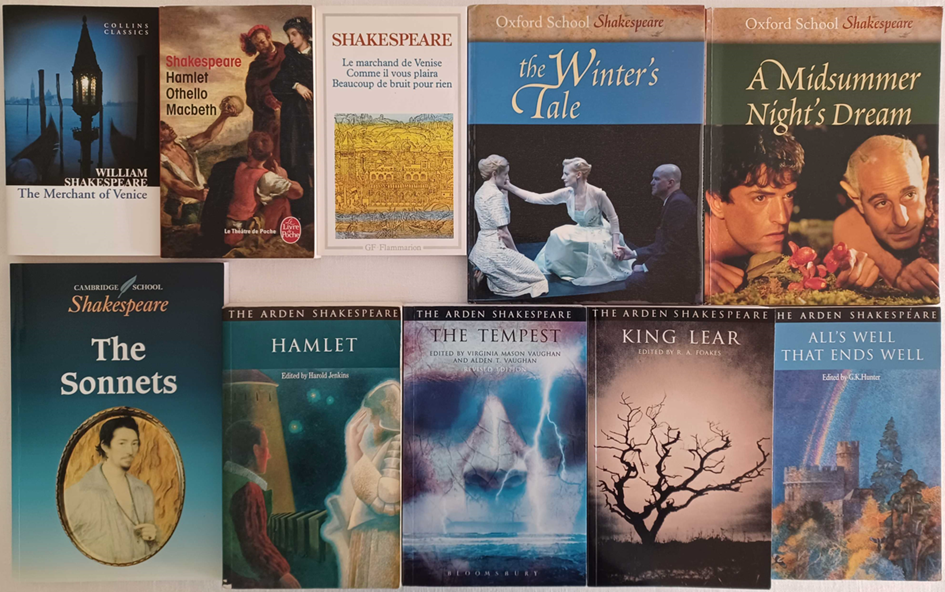
4) Books:
5) DVDs

Illustration at the top of this page: Gwyneth Paltrow and Joseph Fiennes in Shakespeare in Love (1998), by John Madden. Photo from IMDb, https://www.imdb.com/title/tt0138097/mediaviewer/rm627290880/
 The eternal student - anglophile version