Why do we feel sometimes that there is a gap between the sciences and the humanities? Or that science seems to struggle to be integrated into the cultural sphere on an equal footing with arts or literature? Where do these impressions come from?
“Natural philosophy,” as science was called from antiquity to the 19th century, was not always looked down or as a threat by literary intellectuals, nor separated from the other fields of human knowledge and culture. Though sometimes criticized by some Romantic artists such as Blake, even ridiculed by 19th century cartoonists or writers, scientific theories, experiences and institutions were admired by many others, who recognized the growing place of science in their contemporary societies as a welcome addition to the human knowledge. Some scientists, like Humphry Davy and Erasmus Darwin, understood science as another creation of the human imagination, like art and poetry, and their legacies embrace both science and literature: “and” instead of “either…or”.
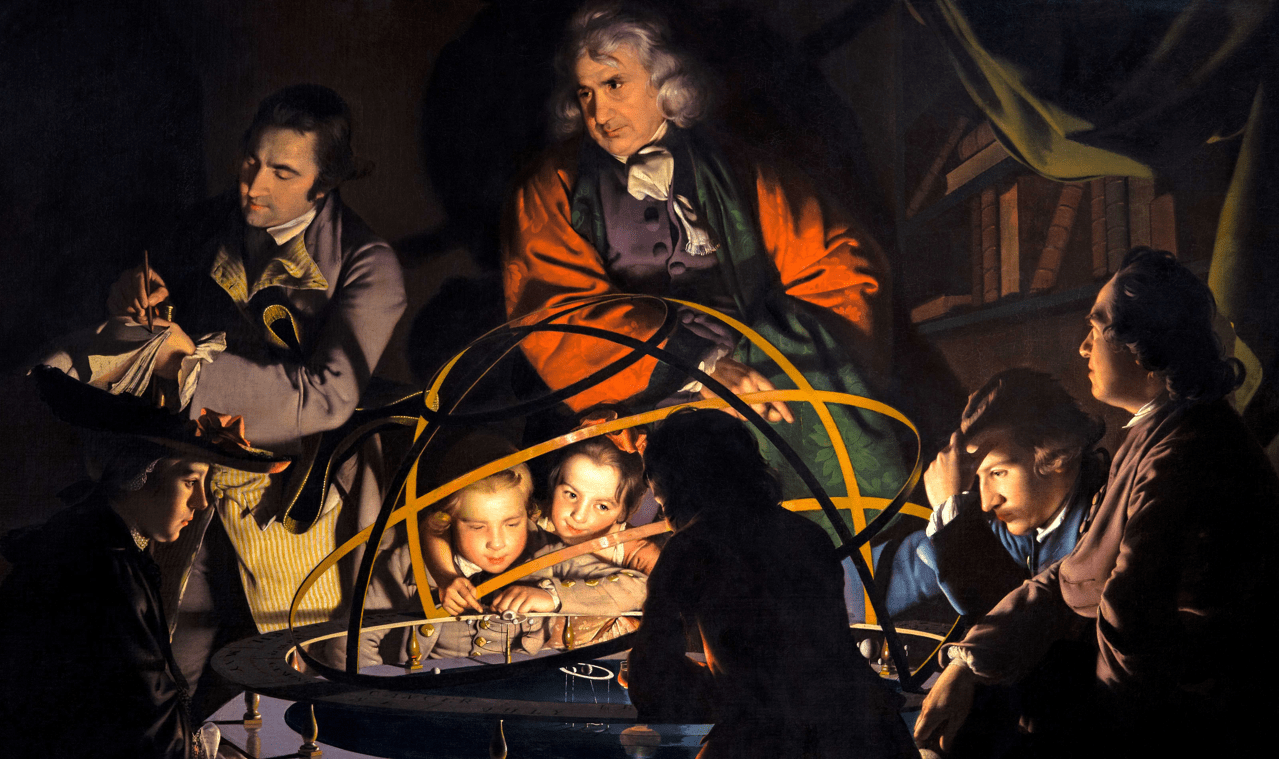
Adopting an inclusive approach, the purpose of my research paper is to demonstrate how sciences and arts (including literature) were intertwined in Britain’s “modern” history, focusing on the period from the Scientific Revolution to the Industrial Revolution. From the artistic illustrations of the human body in Vasilius’s publication De humani corporis fabrica (1543) to the use of contemporary scientific experiences in Mary Shelley’s novel Frankenstein (1818), from the symbolic use of armillary spheres in Queen Elizabeth I’s portraits to the realistic representations of scientific experiences in Joseph Wright of Derby’s paintings, this study shows that art and science are both essential and creative ways of understanding the world. Their approaches may be different, but they are complementary in our human society. To an inquiring mind, there is no gap between scientific, literary, and artistic interests. And as a former engineer who has recently completed a course of study in English language and culture, I think that my personal experience bears witness to it!
Join me in this fascinating journey of discovery and explore the relationship of science and art in Britain, from the Scientific Revolution to the Industrial Revolution:
The complete essay is available in the pdf document here above, and I hope you’ll enjoy reading it. You may download it and use parts of it for your own research work but beware of plagiarism: do not forget to indicate your references as soon as you quote, reformulate, or cite any part or idea written in this essay.
Some of the photos illustrating this RP were taken in Cambridge’s scientific museums, that you can explore in my photo-album: https://eternal-student.com/2024/10/26/scientific-cambridge/.
The illustration on the top of this page is a detail from The Orrery, ca 1766, by Joseph Wright of Derby (1734–1797), Derby Museum and Art Gallery. Public Domain: File:Wright of Derby, The Orrery.jpg – Wikipedia
 The eternal student - anglophile version
