England & Portugal: a long-standing alliance

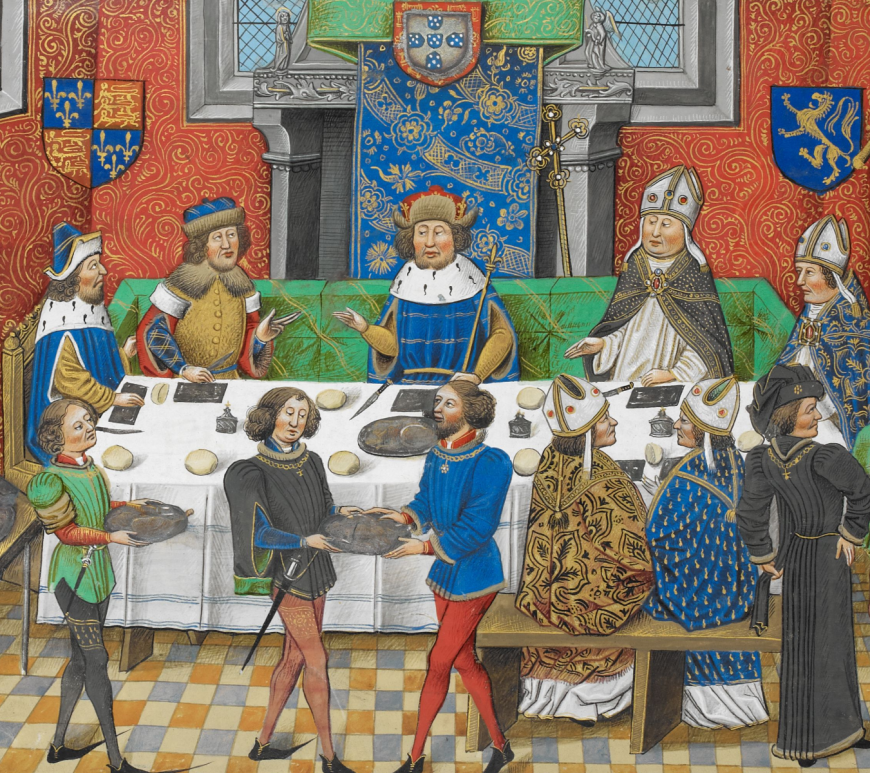
When we visit Portugal and the United Kingdom today, it seems quite absurd to compare the one with the other: geography, climate, culture, architecture, food… everything looks so different. And yet, if we investigate the history of these two countries, we soon discover that they have formed a long-lasting relationship, now regarded as “the world’s oldest alliance,” which can be traced back to 1147 and … Continue reading England & Portugal: a long-standing alliance

Lord Byron, the first European superstar…

… or “mad, bad and dangerous to know”, as Lady Caroline Lamb—one of his lovers—described him? Last April marked the bicentenary of Lord Byron’s death in Missolonghi, Greece, where the poet is still remembered as a national hero: a lifelong supporter of liberal causes, in 1823 he joined the Greeks in their fight against Ottoman rule. Among the events organized to commemorate the life and … Continue reading Lord Byron, the first European superstar…

Science & Art in Britain’s “Modern” History

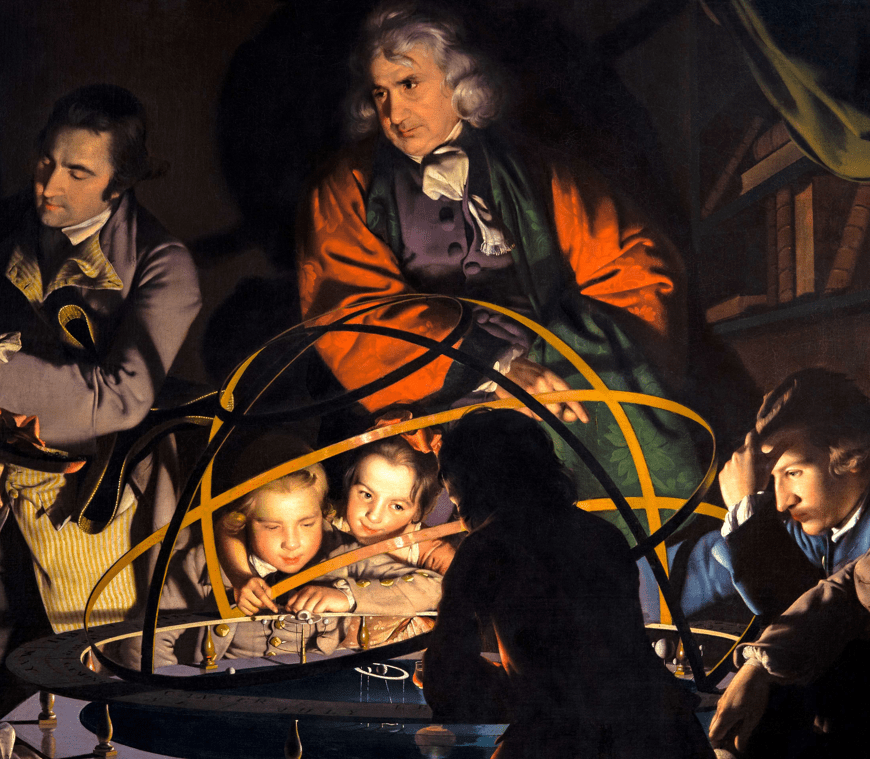
Why do we feel sometimes that there is a gap between the sciences and the humanities? Or that science seems to struggle to be integrated into the cultural sphere on an equal footing with arts or literature? Where do these impressions come from? “Natural philosophy,” as science was called from antiquity to the 19th century, was not always looked down or as a threat by … Continue reading Science & Art in Britain’s “Modern” History

An excursion to Stratford-upon-Avon…

or a short but intense immersion into “Shakespeareland”! A touristic circus for some, a place of pilgrimage for the Bard’s fans, I found that Stratford was worth the trip, especially for experiencing a play at the Royal Shakespeare Theatre. I invite you to follow me in this memorable journey of discovery. An original edition of the Folio (1623) photographed at the Wren Library, Trinity College, … Continue reading An excursion to Stratford-upon-Avon…

Keats, a Regency poet

When one thinks about Regency England, a writer comes immediately to one’s mind: Jane Austen, whose novels describe the life of country gentlefolk during that period. And yet, the growing, educated, middle-classes started to dwell in London suburbs and develop a new way of life. Among them, John Keats and his circle of friends wrote breakthrough poetry, which disturbed Britain’s establishment. Considering Keats’s aesthetic of … Continue reading Keats, a Regency poet

My own Shakespeare

…or rather, a modest introduction to Shakespeare’s world! More than four centuries after they were created, why haven’t Shakespeare’s plays lost their magic on us? According to Harold Bloom and Stephen Greenblatt, an answer to this question may be found in Shakespeare’s ability to enter deeply into almost every character he deployed. This skill seems to have been his signature — what John Keats called … Continue reading My own Shakespeare

Essay on ‘To Autumn’

Composed after a walk in the countryside, Keats’s ode ‘To Autumn’ is regarded as “one of the most nearly perfect poems in English”. How did John Keats reach such a stylistic achievement in writing on a quite banal subject—Nature’s bounties in Autumn? Autumn has always been my favourite season for its display of Nature’s splendours, especially the rich palette of colours offered by the trees … Continue reading Essay on ‘To Autumn’

Mediaeval literature in today’s world

To what extent is a knowledge of mediaeval literature relevant to “modern” literature (from the 19th century onwards) or else to our “modern” civilisation? The revival of interest in mediaeval history and art started in the mid-18th century and widely spread throughout Europe, together with the national sentiments which began to flourish in each country: politicians were seeking in the past some glorious symbols to … Continue reading Mediaeval literature in today’s world

Gulliver & The Man in the Moone

Real or imagined? The non-fictional and the fictional in Francis Godwin’s The Man in the Moone (1638) and Jonathan Swift’s Gulliver’s Travels (1726). In these works of fiction, the characters and societies described, as well as the travels recounted by the narrators, were imagined by their authors. Generations of critics and scholars, though, have tried to decode and to analyse elements of reality or of … Continue reading Gulliver & The Man in the Moone

Jane Eyre: from feminism to translation…

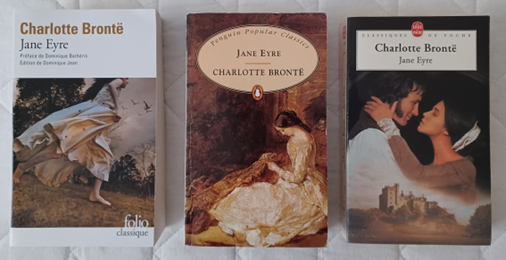
I read this great classic of British literature, which belongs to the World Literature canon, from a feminist perspective. Interestingly, three of its translations in French, published at various periods, not only reveal the evolution of the society and culture contemporary of each translator, but also of the evolution of translation techniques. For almost two centuries, Charlotte Brontë’s novel Jane Eyre has never ceased to … Continue reading Jane Eyre: from feminism to translation…

Poetry: lost in translation?

Is the translation of a poem from English to French like ‘Mission Impossible’? When I studied the English language at university, several classes were devoted to translating texts from English to French and vice versa. They opened my eyes on the creative process involved in translation, to find the right balance between loyalty to the source text and quality of the target text. I couldn’t … Continue reading Poetry: lost in translation?

What’s the link between…

… Claude Monet’s painting The Thames at Westminster, William Wordsworth’s poem ‘Composed Upon Westminster Bridge, September 3, 1802’, and Charles Dickens’ novel Oliver Twist, “The expedition” chapter 21? For this assignment, I found that the set of documents represented the perspectives of three different artists of the city of London during the 19th century. Although Monet’s painting and Wordsworth’s poem seem to be like snapshots … Continue reading What’s the link between…

A wealth of lectures…

How about watching a wealth of choice — and free! —lectures and programmes on the internet about the following subjects: Nature, British Romantic poets, Pre-Raphaelite painters, and Shakespeare’s influence on their works? When I started studying for a Master’s degree in English, in October 2020, I already knew that I would choose a subject for my thesis revolving around my favourite topics in British culture … Continue reading A wealth of lectures…

Two pieces of creative writing

First, as a mandatory assignment—to assess our writing skill in English during the last year of Bachelor (“Licence” in French universities)—our teacher asked us to compose a story (flash fiction) of no less than 1 000 words and no more than 1 100 words. It should take place on a farm where everything is done manually, and one third of the composition should be made up of … Continue reading Two pieces of creative writing