


Gulliver & The Man in the Moone
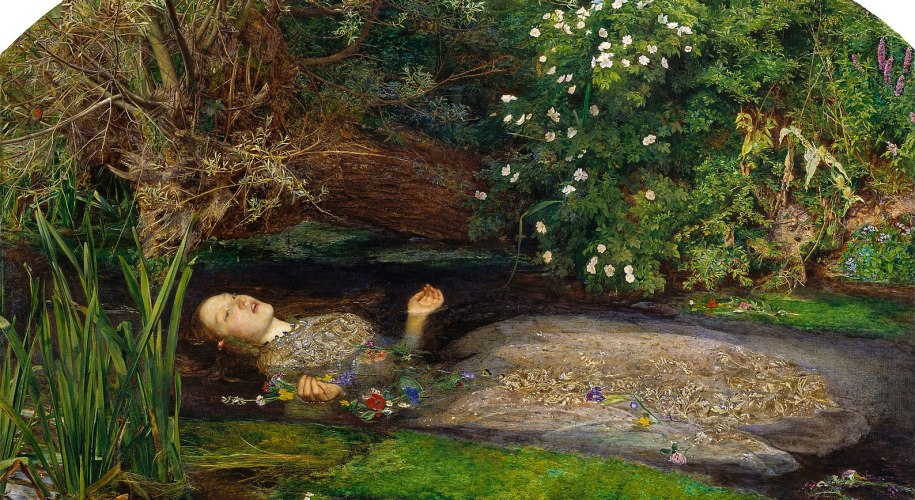
Real or imagined? The non-fictional and the fictional in Francis Godwin’s The Man in the Moone (1638) and Jonathan Swift’s Gulliver’s Travels (1726). In these works of fiction, the characters and societies described, as well as the travels recounted by the narrators, were imagined by their authors. Generations of critics and scholars, though, have tried to decode and to analyse elements of reality or of … Continue reading Gulliver & The Man in the Moone

Jane Eyre: from feminism to translation…
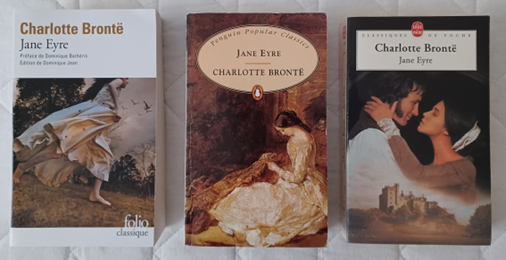
I read this great classic of British literature, which belongs to the World Literature canon, from a feminist perspective. Interestingly, three of its translations in French, published at various periods, not only reveal the evolution of the society and culture contemporary of each translator, but also of the evolution of translation techniques. For almost two centuries, Charlotte Brontë’s novel Jane Eyre has never ceased to … Continue reading Jane Eyre: from feminism to translation…

Poetry: lost in translation?
Is the translation of a poem from English to French like ‘Mission Impossible’? When I studied the English language at university, several classes were devoted to translating texts from English to French and vice versa. They opened my eyes on the creative process involved in translation, to find the right balance between loyalty to the source text and quality of the target text. I couldn’t … Continue reading Poetry: lost in translation?

What’s the link between…
… Claude Monet’s painting The Thames at Westminster, William Wordsworth’s poem ‘Composed Upon Westminster Bridge, September 3, 1802’, and Charles Dickens’ novel Oliver Twist, “The expedition” chapter 21? For this assignment, I found that the set of documents represented the perspectives of three different artists of the city of London during the 19th century. Although Monet’s painting and Wordsworth’s poem seem to be like snapshots … Continue reading What’s the link between…
A wealth of lectures…
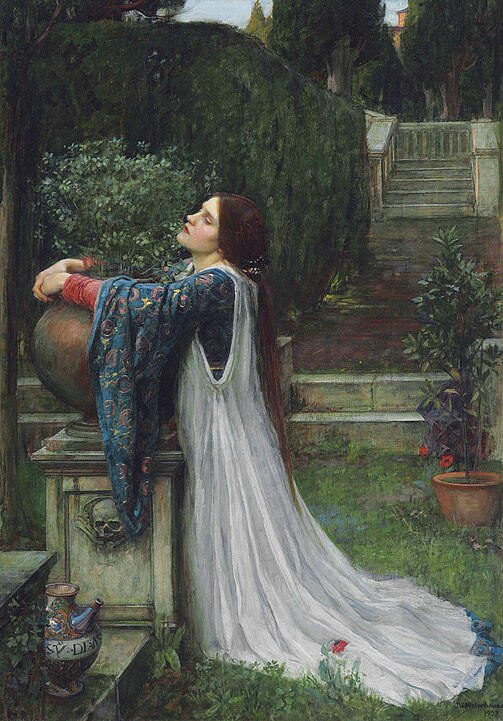
How about watching a wealth of choice — and free! —lectures and programmes on the internet about the following subjects: Nature, British Romantic poets, Pre-Raphaelite painters, and Shakespeare’s influence on their works? When I started studying for a Master’s degree in English, in October 2020, I already knew that I would choose a subject for my thesis revolving around my favourite topics in British culture … Continue reading A wealth of lectures…

Two pieces of creative writing
First, as a mandatory assignment—to assess our writing skill in English during the last year of Bachelor (“Licence” in French universities)—our teacher asked us to compose a story (flash fiction) of no less than 1 000 words and no more than 1 100 words. It should take place on a farm where everything is done manually, and one third of the composition should be made up of … Continue reading Two pieces of creative writing
Three Sisters: Poetry, Painting and Gardening
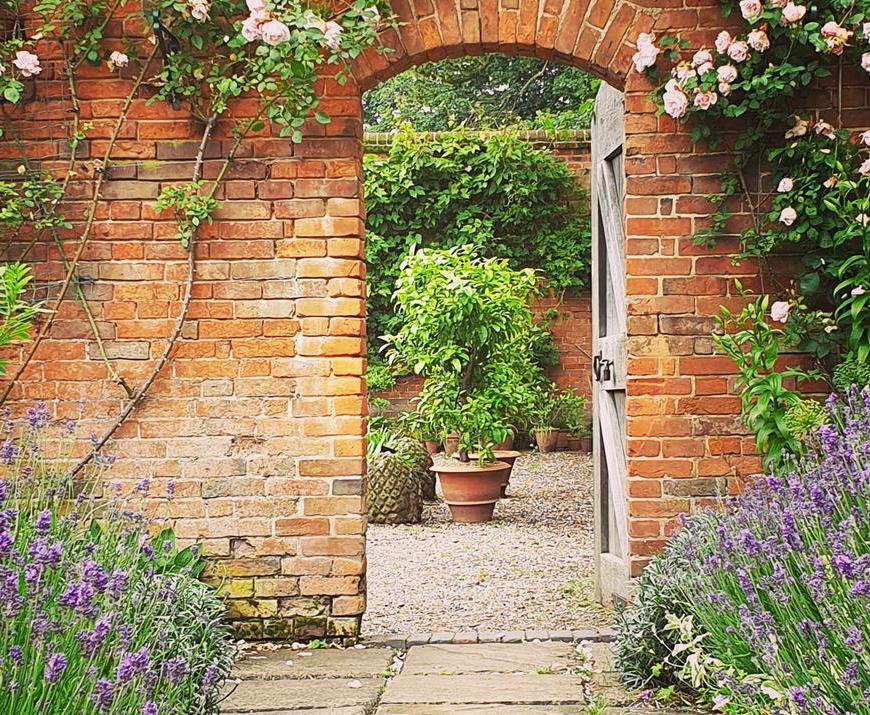
According to Horace Walpole (1717-1797), “Poetry, Painting and Gardening (…) will forever by men of taste be deemed three sisters, or the Three New Graces who dress and adorn nature.” How about exploring the distinctive personalities of England’s gardens and landscapes and their representations in arts in “modern” history? What makes the English countryside and gardens so characteristic within the European scenery? Why and how … Continue reading Three Sisters: Poetry, Painting and Gardening

A trip to Yorkshire
In May 2014, I decided to explore one of the largest historic areas of England: Yorkshire. I visited its capital, York, and a beautiful Victorian spa town, Harrogate. Then, an English friend introduced me to some of Yorkshire’s natural beauties, the North York Moors National Park, the coast from Whitby to Scarborough, and Nidderdale AONB. Historically a county, Yorkshire corresponds now to the ceremonial counties … Continue reading A trip to Yorkshire

A trip to the West-Midlands
In 2017, I took the opportunity of a one-week intensive language course to discover the West Midlands, a part of England I had never seen before: Birmingham, Shrewsbury and Chester. West Midlands designates both a region of several counties and the county including Birmingham — England’s second most populated city after Greater London. I invite you to join me in this cultural trip, from the … Continue reading A trip to the West-Midlands

From the Liberation to the Cold War
In this post, I invite you to read two essays in American civilization that I wrote at University. The first one, ‘The dark side of Liberation‘ is quite short because it was written to prepare an oral presentation. I wanted to broach an aspect of WWII which was hidden for decades: the rapes and abuses committed by some GIs during Europe’s Liberation. The second essay … Continue reading From the Liberation to the Cold War

An excursion into American literature
From Thoreau’s Walden and Whitman’s Song of Myself to the adaptations of Tennessee Williams’s and Arthur Miller’s plays for the cinema, I invite you to follow me in a short but personal journey of discovery… In this attachment I gathered a few exercises and essays—most of them written when I was an undergraduate (Licence L1 to L3). They only represent a quick dip in America’s … Continue reading An excursion into American literature

New England: A literary trip
In 2019, I suggested to my American friend that we could visit together some of the places in New England that I had heard of in my class of American literature, such as Concord, the cradle of Transcendentalism. My friend liked the idea to (re)visit some milestones in her own culture and came back to me with the outline of a 5-day itinerary, leading us … Continue reading New England: A literary trip

What’s the link between…
The Alienated Manor, a drama written in 1798 by a long-forgotten Scottish author, Joanna Baillie, a photographic artwork created in 2015, Portrait of Charles Edward Stuart (after William Mosman) by the Scottish artist Calum Colvin, and a travelogue, A Tour thro’ the whole Island of Great Britain, written by Daniel Defoe in 1724-27? This “academic exercise” was an assignment given in 2021. You can find … Continue reading What’s the link between…

My first trip to Scotland
In May 2015, I had the opportunity to enrol in an intensive language course to improve my English. As I had never been to Scotland before, I chose a language school in Edinburgh, and extended the duration of my trip to do some sightseeing. With an English friend, I explored Edinburgh and the Loch Lomond and Trossachs National Park before the course. Then, a couple … Continue reading My first trip to Scotland

New-York and more: the architect’s eye
In 2011, my children and I made our second trip to the United States. My daughter was a first-year student in Nancy’s School of Architecture and wanted to see or visit several buildings in NY City that she had heard of in her classes, quite recent and/or famous for their architecture. My son, still a teenager, and I agreed to follow her steps in NY … Continue reading New-York and more: the architect’s eye

A long weekend in Dublin
I went to Dublin with an Irish friend in August 2012 for a five-day trip (including travel time). I was delighted by this experience: so many young people in the city centre, so much energy and life! I have posted here the outline of my trip: it may give you some ideas or suggestions for a future trip to this vibrant city. Continue reading A long weekend in Dublin
NI: from The Troubles to dark tourism
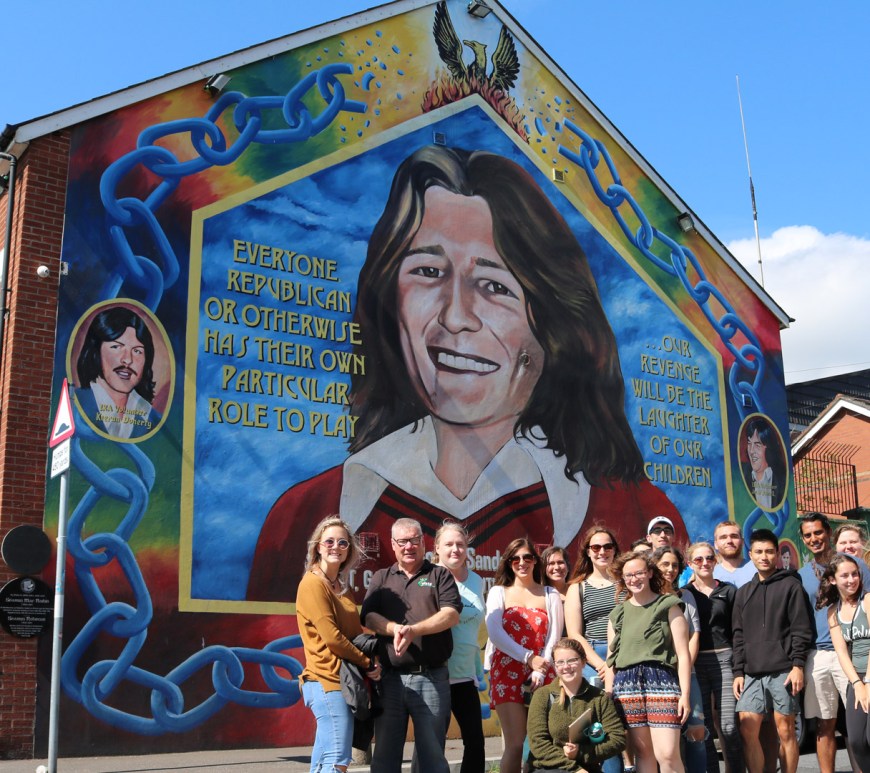
In May 2013, the NI government established a 10-year programme to reduce and eventually remove all interface barriers. What are these “interface barriers” and why were they erected? As we met the 2023 deadline, to what extent has this programme been implemented? When I watched a documentary about Belfast peace walls a few years ago, I was shocked to learn that such barriers still existed … Continue reading NI: from The Troubles to dark tourism

The Troubles in NI literature
The role of fire in three NI literary works: Brian Friel’s play The Freedom of the City (1973), Bernard Mac Laverty’s novel Cal (1983), and The Fire Starters, a magic-realist novel by Jan Carson (2019). As a teenager growing up in France in the late 70s-early 80s, I vaguely heard about violent fights in Northern Ireland (NI) on television, but the idea of a “war” … Continue reading The Troubles in NI literature

My trip to the Highlands
Travel diary from 4 to 17 June 2023 (Traduction FR en bas de la page) When I prepared my luggage for this trip to Scotland, I thought that a quilted jacket and a windcheater would allow me to adapt easily to any sudden change of weather in the Highlands and islands… to any but the extraordinary heatwave which lasted in Scotland for more than three … Continue reading My trip to the Highlands

Is Gaelic becoming an extinct language in Scotland?
To what extent might the multicultural language policies introduced since 2001 by the British and the Scottish governments to “revitalize” the Gaelic language effectively counter its relentless decline? Before English became the main language spoken in Scotland in the 18th century, there were different languages and dialects spoken across the country: whereas Gaelic was the dominant language in the Highlands and Islands—the Gàidhealtachd—the Lowlands adopted … Continue reading Is Gaelic becoming an extinct language in Scotland?

Equity in Scotland’s education system
Since 1707, when the Scottish and the English Parliaments united to form the Parliament of Great Britain, education has been one of the areas (with the church and the law) reserved to Scotland. To what extent can the Scottish education system be judged today as providing more equity to its people – especially its students – than the English one? For most Western countries, education … Continue reading Equity in Scotland’s education system
 The eternal student - anglophile version